The distance between your plate and its origin has never been greater
Most food travels thousands of kilometres before reaching your table. Somewhere along the way, we stopped asking where it came from. Industrial supply chains optimised for efficiency have created a disconnect so profound that many children grow up believing carrots come from supermarkets, not soil.
This wasn't always the case. Fifty years ago, communities knew their farmers. Markets buzzed with conversations about weather patterns, harvest timing, and the quality of this season's crop. Food had context. It had a story.
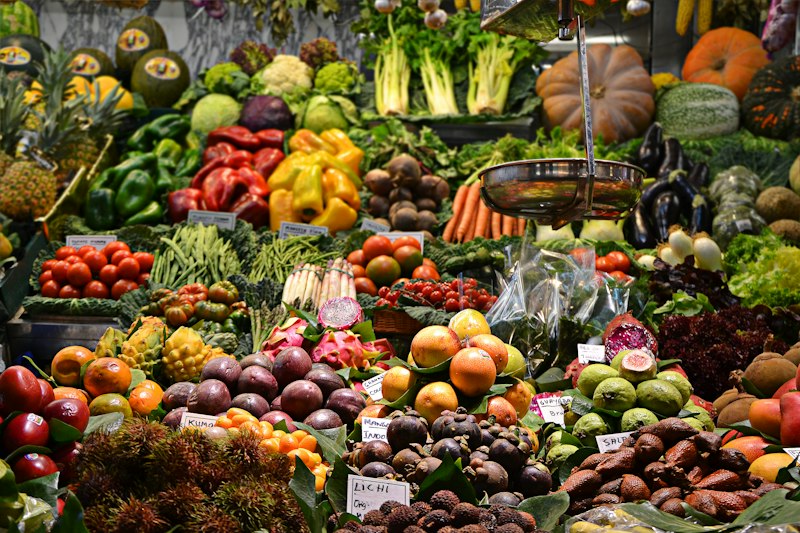
In New Zealand, something remarkable is happening. Small-scale farmers and conscious consumers are rebuilding those connections. Not through nostalgia, but through practical systems that make fresh, traceable food accessible again.
Why local food systems collapsed
The shift toward centralised food distribution seemed logical at the time. Economies of scale meant lower prices. Standardisation meant consistency. But these efficiencies came with hidden costs.
Beyond environmental impact, centralisation altered what we grow and eat. Varieties selected for shelf life replaced those bred for flavour. Harvest timing prioritised shipping logistics over ripeness. The tomato in your hand was likely picked green weeks ago, then artificially ripened in storage.
Small farms couldn't compete with industrial pricing. Many disappeared. Rural communities lost not just livelihoods but centuries of accumulated knowledge about local growing conditions, seasonal patterns, and land stewardship.
See how we're changing thisWhat makes local systems work better
When food travels shorter distances, everything changes. Farmers can harvest at peak ripeness because produce reaches you within hours, not weeks. This single shift transforms both nutrition and taste.
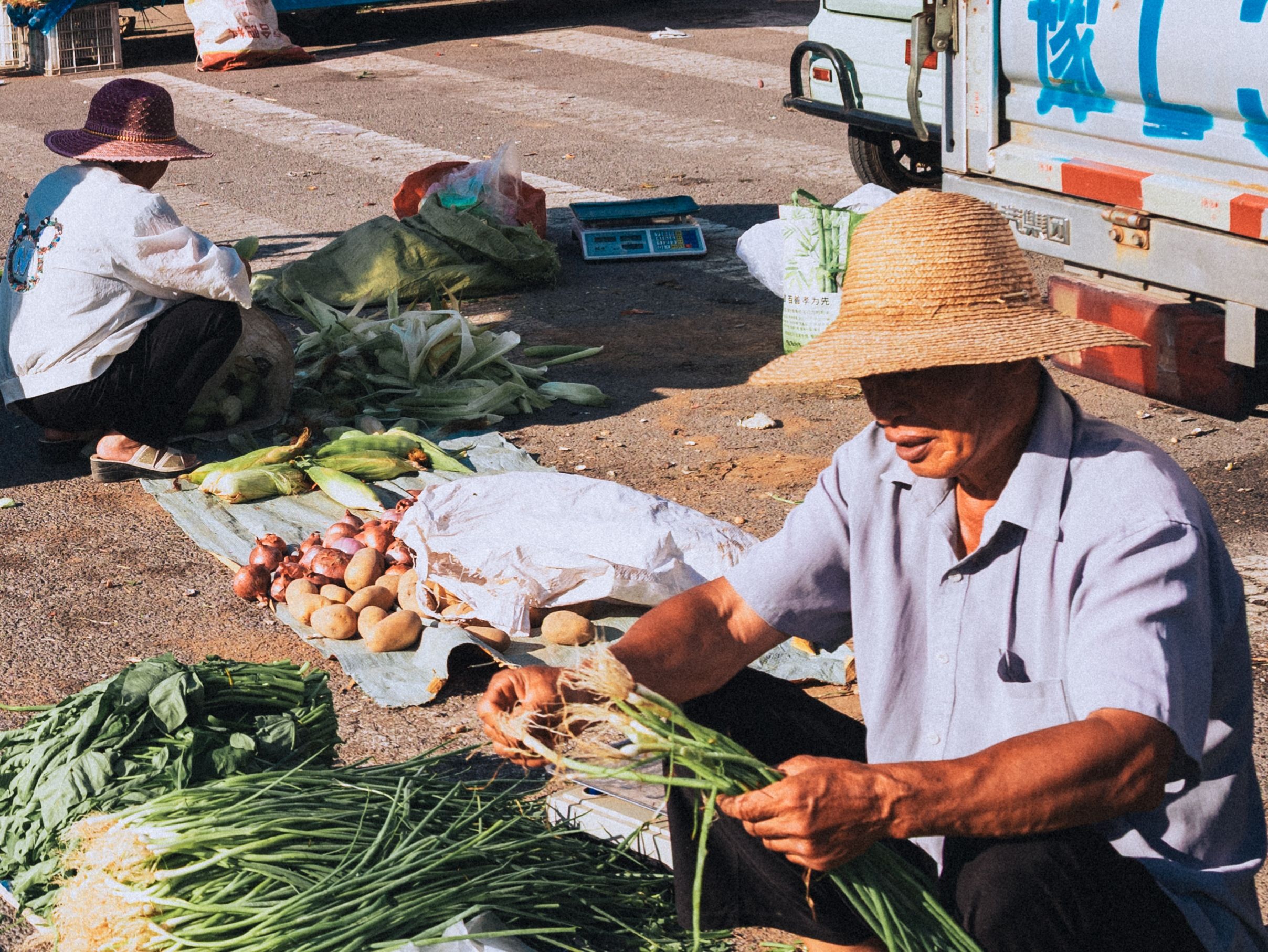
Studies indicate that locally grown produce harvested at maturity may retain higher levels of certain vitamins and phytonutrients compared to items picked early for long-distance transport [2].
But the benefits extend beyond nutrition. Local food economies keep money circulating in communities. When you purchase directly from regional producers, approximately three times more revenue stays local compared to conventional retail channels. This multiplier effect supports not just farmers, but the entire ecosystem of local businesses.
"I used to buy organic from the supermarket thinking I was making good choices. Then I joined Ochre Tide's weekly box programme and tasted what fresh actually means. Tomatoes that smell like tomatoes. Greens harvested that morning. I can't go back."
Transparency becomes natural in local systems. You can visit the farm where your food grows. You can ask questions and get real answers. This accountability creates trust that no marketing label can replicate.
The eco-market model
Traditional farmers markets serve an important role, but they're limited by geography and timing. Most operate weekly, in specific locations, during narrow time windows. If you work irregular hours or lack transport, accessing them becomes difficult.
Eco-markets evolved to solve this. They function as coordinated networks connecting multiple small producers with broader distribution options. The model varies, but the principle remains consistent: aggregate local supply to meet diverse consumer needs while maintaining direct relationships between growers and eaters.
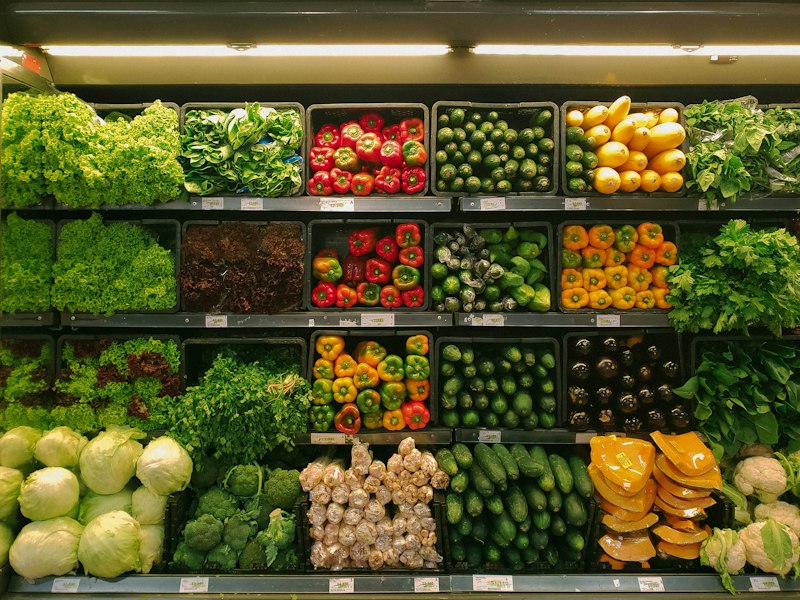
Some eco-markets operate physical hubs. Others coordinate delivery routes. Many combine both approaches. What unites them is commitment to shortening supply chains without sacrificing convenience.
How our system works
We partner with seventeen farms across Canterbury and Otago. Each specialises in what grows best on their land. Rather than forcing farms to diversify beyond their strengths, we create variety through collaboration.
One farm focuses on heritage tomato varieties. Another raises pastured chickens. A third cultivates leafy greens year-round using passive solar greenhouses. Together, they provide what individually they couldn't: complete nutrition from multiple sources.
Explore available optionsYou select what matters to you. Maybe you want a curated weekly box reflecting seasonal availability. Perhaps you prefer choosing specific items as needed. Both approaches work because we've built flexible logistics that adapt to different preferences.
Orders placed before Wednesday evening arrive Friday. The timing isn't arbitrary—it allows farms to harvest Thursday for next-day delivery. Nothing sits in cold storage. Nothing accumulates miles.
What this means for your table
Taste is the most immediate difference. Food grown for flavour rather than durability simply tastes better. But the impact goes deeper.
You'll notice seasonal rhythms you'd forgotten existed. Asparagus becomes something you anticipate each spring rather than a year-round option. Scarcity creates appreciation. Abundance feels earned.

Your cooking might change too. When ingredients are genuinely fresh, they need less intervention. Simple preparations let quality speak. Meals become less about complex techniques and more about showcasing what's at its peak.
"My children now ask about the farms their food comes from. We visited the orchard where our apples grow last autumn. They collected windfall fruit and understood why bent carrots don't mean inferior quality. These are lessons no textbook teaches."
Pricing that reflects reality
Local food isn't always cheaper than supermarket equivalents. Being honest about this matters. When you pay $6.50 for a dozen eggs from pastured hens, you're covering real costs: land for ranging, time-intensive care, feed without prophylactic antibiotics.
What you're not paying for: advertising budgets, middle-tier distribution markups, or packaging designed to survive transcontinental shipping.
Many find the overall expense comparable when accounting for reduced waste. Food that tastes better gets eaten. Nothing sits forgotten until it spoils. The premium for quality becomes offset by changed behaviour.